
Whitepaper: Mastering the Omnichannel Approach
For brands and their customers, the traditional path to conversion no longer applies To achieve success, mastering the omnichannel approach demands a deep understanding of the target audience’s decision journey and the creation of a learning system capable of providing relevant content. Whether navigating the complexities of pharma journeys,...

Whitepaper: Preparing for the At-home Diagnostic Testing Revolution
Three best practices for building stronger connections with patients. In the aftermath of the COVID-19 pandemic, the landscape of healthcare and life sciences has undergone a significant transformation, with at-home diagnostic testing emerging as a key innovation reshaping patient expectations and care. The "Preparing for the At-Home Diagnostic...
Whitepaper: Strategies to Maximize Customer Engagement
Simplify to amplify: “Declutter” your current Customer Engagement approach to maximize value In today's rapidly evolving healthcare landscape, effective customer engagement strategies are pivotal for success, and now more than ever, pharmaceutical companies must adapt to maximize value. Download this insightful whitepaper authored...
Whitepaper - The path to success in precision medicine: market access for CDx
Discover the patterns that emerge from real-world CDx development and post-approval projects. Struggling to achieve the widespread adoption of your precision medicine therapy? The missing piece might be the commercialization of your companion diagnostic (CDx). Historical underinvestment in CDx commercialization and inadequate reimbursement policies...
Whitepaper: Accelerate Launch Readiness
How to Right-size Omnichannel Capabilities for Pharma Innovators Omnichannel marketing capabilities directed at HCPs and patients are one domain within a marketer’s control, and can contribute significantly to launch success. With the right partner and a lean approach, you can gain effectiveness and efficiency by using existing, proven...
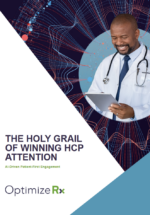
Whitepaper: The Holy Grail of Winning HCP Attention
AI-Driven Patient-First Engagement Pharma marketers are investing in powerful next-best-action (NBA) strategies to engage healthcare providers (HCPs) – and nothing is more actionable than knowing when your brand-eligible patient is with their HCP. How do patient care and milestone predictions transform HCP marketing? This...
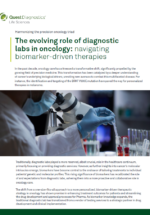
Whitepaper: The Evolving Role of Diagnostic Labs in Oncology: Navigating Biomarker-Driven Therapies
Discover the transformative role diagnostic labs are playing in the rapidly evolving landscape of oncology care. Our latest white paper, “The Evolving Role of Diagnostic Labs in Oncology: Navigating Biomarker-Driven Therapies,” delves deep into the symbiotic relationship between diagnostic labs, pharmaceutical companies, and healthcare...
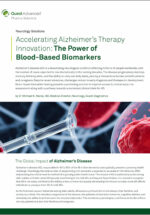
Whitepaper: Accelerating Alzheimer’s Therapy Innovation: The Power of Blood-Based Biomarkers
The escalating global challenge of Alzheimer's Disease (AD) demands new approaches to detection, diagnosis, and treatment. Dr Michael K. Racke, Medical Director of Neurology at Quest Diagnostics, will delve into recent advancements in the AD diagnostic landscape. Discover how blood-based biomarkers are reshaping AD therapy by: Simplifying...

Whitepaper: What Do Prescribers (And Other HCPs) Prefer?
Communications In Healthcare: What Do Prescribers (And Other HCPs) Prefer? Healthcare professionals’ communication preferences are changing, and it’s important to know how. HealthLink Dimensions’ 2023 survey revealed the marketing and educational materials that HCPs read, as well as their preferred methods of delivery...

Whitepaper: What’s Really Holding Sales Reps Back?
How to align digital engagement strategies to liberate your sales team Omnichannel strategies are changing the shape of pharma marketing. Yet many on the inside are feeling stuck. To help companies get the most out of their omnichannel efforts, Syneos Health reveals the common disconnects slowing many companies down in this report surveying...

Whitepaper: Preparing for Commercialization With an “Answer First” Approach
Defining the questions to find the answer first in order to leverage AI-predictive modeling The healthcare market is ablaze with innovation and progress. Big data and AI are being discussed in ways that only a small percentage of marketers understand, leaving many unaware of how to capitalize on these advances. In this rapidly advancing marketplace,...

Whitepaper: The State of Social – Social Media Topics to Follow Closely
From the emergence of new platforms like BeReal to the multi-billion dollar acquisition of Twitter and every TikTok trend in between, the social media landscape has been full of twists and turns. Each of these moments led to trends that we believe will have an impact on social media strategies and investments in the future. From the emergence...
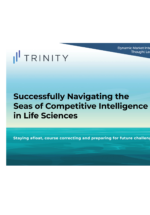
Interactive E-Book:
Successfully Navigating the
Sea of Competitive Intelligence
in Life Sciences
Trinity Life Sciences illuminates optimal competitive intelligence (CI) approaches with a qualitative study that illustrates how companies are handling the volume and velocity of data. Highlights Trinity’s Dynamic Market Intelligence Center of Excellence conducted a qualitative study, speaking to 14 CI Leaders (those who have...